Some people have asked me why I’ve worked on LGBTI+ issues this summer. My personal answer to this question is a mixture of a passion for advancing human rights, a deep empathy with my friends who belong to the LGBTI+ community, and having met inspiring people at the OECD who work on this topic.
While my work sprung from personal motivations, the journey (and this blog post) turned into a broader reflection on the collective duty we hold towards fostering an inclusive and empathetic society. I believe this responsibility does not lie solely with those who are fighting for their rights – it extends to every individual in society. In this blog post, I delve into the complex yet rewarding world of allyship, and why it is not only important, but necessary for fostering a society that embraces everyone equally.
What is allyship?
Allyship, in its most basic form, is about understanding and respect. The Center for Creative Leadership defines it as “the actions […] that leaders take to support, amplify, and advocate with others, most especially with individuals who don’t belong to the same social identities as themselves.” Allyship is, simply put, lending your voice and support to people who have different backgrounds and identities than your own.
In highly individualized societies such as the US, this can be hard. We are all so individual, different, our lived experiences are unique.
In societies where personal beliefs vary immensely, allyship promotes dialogue and understanding, fostering connections that are grounded in mutual respect and shared human experiences. Allyship helps us to bridge what makes us different and surpass the boundaries of identity, embracing the essence of empathy and solidarity.
And this dialogue is needed more than ever.
Why is allyship important?
A recent unsettling study on masculinity attitudes in Germany by Plan International (2023, available in German only) finds that 48 per cent of respondents – 18-35 year old German men) showcased discomfort towards public displays of homosexuality. These studies serve as a reminder that there is work to be done. While we can’t reshape society over night, we need to gradually promote understanding and respect among diverse groups.
Side note on gender equality: The German study shows a high prevalence of problematic beliefs and views towards gender equality as well. Worth a read! The recent UN report on the 2023 Gender Social Norms Index concludes “Gender bias is a pervasive problem worldwide.” They call it the “decade of stagnation.” It shows that we all, regardless of gender, need to continue our efforts to make this world a fairer place for everyone.
In Paris, I attended the LGBTI+ reception of the Permanent Representative of Ireland to the OECD, Ambassador Gerard Keown, celebrating end of pride month. In his opening remarks, he mentioned allyship as a continuous struggle for two things. a) For protecting these human rights that politicians, human rights activists and many more have established before, because we cannot take them for granted. And b) for establishing them in places where human rights are still violated.
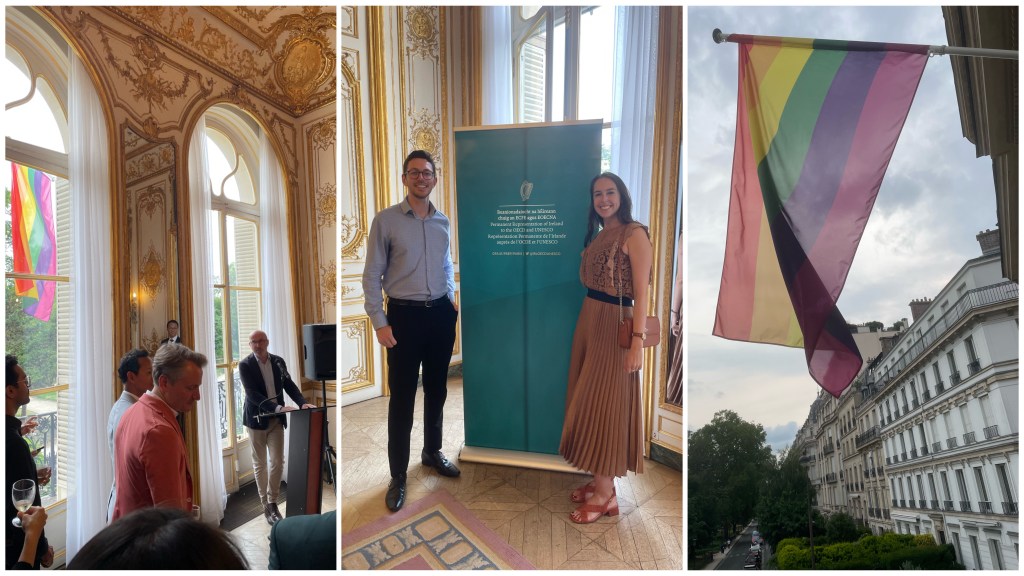
His words offered a realistic outlook on the importance of continuous efforts and incremental changes, also spearheaded by allies.
The theme of humanity and solidarity reminds me of a quote I heard many years ago, but never forgot. It has been attributed to both Mahatma Gandhi and former President Hubert Humphrey: “The measure of a society is how it treats its weakest members.” Regardless of who actually said it, the quote reminds me of the common responsibility that many (including myself) feel towards society. A responsibility to build and maintain a society that works for everyone, not just a few, or just the majority of people.
In conclusion, being an ally is more than just being a support system, it’s listening and giving a voice. It’s about being an active participant in the fight to transform society into a place where everyone can live freely and equally. Because true freedom is only achieved when everyone is free.
How can you be an ally for others in your daily life?
 Valeria Silva Gomez, 2023
Comments